The concept of Observer Change in coaching is closely related to the practice of Mindset Intervention. Both concepts involve helping people change their perspectives and beliefs, which ultimately leads to personal growth, greater self-awareness, and better decision making.
Below is a detailed explanation of how the concept of Observer Change in coaching relates to Mindset Intervention.
The Observer Change in coaching refers to the process of encouraging people to step back and observe their thoughts, emotions, behaviors and circumstances from a more objective and distant point of view.
This practice involves developing self-awareness and mindfulness to better understand automatic reactions and thought patterns.
Mindset Intervention focuses on changing an individual’s core beliefs, attitudes, and thought patterns, especially from a Fixed Mindset to a Growth Mindset or other positive mindsets.
The goal is to challenge and change Limiting Beliefs that can hinder personal development and replace them with Empowering Beliefs that promote resilience, self-improvement and a positive outlook.
The Relationship between Observer Change and Mindset Intervention
Observer Change is a technique that improves self-awareness, allowing people to observe their thoughts and emotions without judgment. This self-awareness is a key aspect of a Mindset Intervention.
Self-awareness gained through Observer Change can reveal Limiting Beliefs and thought patterns that contribute to a Fixed Mindset. This self-awareness is the first step in addressing and changing mindset.
The Observer Change allows individuals to identify and recognize their Limiting Beliefs, which are often deeply rooted in their thought processes and behavior.
When individuals observe their thought patterns and emotional reactions from an objective point of view, they can become aware of counterproductive beliefs that need to be addressed in a Mindset Intervention.
As explained above, the goal of a Mindset Intervention is to help the person adopt a Growth Mindset rather than a Fixed Mindset. This is clearly associated with the idea of Observer Change.
A Mindset Intervention is never just First Order Learning. It is not just about changing the Actions, it is always about changing the Observer.
Therefore, the consequences of a successful Mindset Intervention will always be Second Order Learning or Transformational Learning.
The Process of an Effective Mindset Intervention
Once Limiting Beliefs are identified through Observer Change, the next step is to challenge and reframe these beliefs. This is where Mindset Intervention comes into play.
Coaches, therapists or mentors work with people to question the validity of their Limiting Beliefs and guide them towards adopting more empowering beliefs consistent with a Growth Mindset.
The goal is to replace the Fixed Mindset with a Growth Mindset. The Observer Change helps people understand how their Fixed Mindset works by shedding light on their thought processes.
Mindset Intervention builds on this understanding to facilitate the transformation from a Fixed Mindset to a Growth Mindset. Clients learn to replace self-limiting beliefs with empowering beliefs that support their personal and professional development.
Shifting to a Growth Mindset through a Mindset Intervention and Observer Change can lead to changes in behavior, decision making, and problem solving.
People are more likely to take on challenges, push themselves, and face setbacks with resilience when they view their abilities and potential through a growth-oriented lens.
Both concepts require continuous practice and self-reflection. Observer Change and Mindset Intervention are not isolated events; They involve continuous self-improvement and maintaining a positive mindset.
Mindset Intervention in the Context of Coaching
Generally, in the context of a coaching session, the coach attempts to identify whether the client has a particular Limiting Belief. The coach then asks challenging questions that can trigger an Observer Change. As a consequence, the client may be able to abandon their particular Limiting Belief and adopt a more positive Empowering Belief in its place.
If the coach understands and adopts Mindset Theory, she can attempt to identify the client’s mindset rather than looking for a specific belief. So, instead of simply trying to challenge this particular belief, the coach can adopt the practice of Mindset Intervention. As a consequence, the client can move from a Fixed Mindset to a Growth Mindset.
Limiting Beliefs will likely never appear in isolation. A person who has a particular Limiting Belief probably also has several other similar Limiting Beliefs. Changing a specific belief will not be enough for this person to reach their full potential.
Therefore, the idea of Mindset Intervention is probably more effective than simply challenging a specific belief. If the coach is able to help their client leave a Fixed Mindset and adopt a Growth Mindset, the positive consequences will have a greater impact on the client’s well-being and will probably also last longer over time.
The concepts of Limiting and Empowering Beliefs in coaching are closely related to Mindset Theory, as they are integral components of an individual’s mindset, which is the underlying set of beliefs and attitudes that shape their thoughts, behaviors and actions. Below we will explore how these concepts intersect and interact within the framework of Mindset Theory.
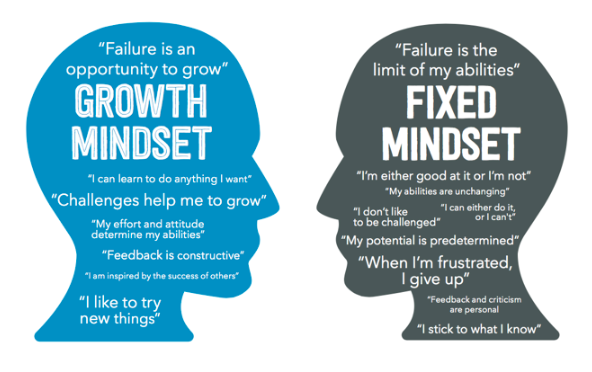
Mindset Theory, developed by Carol Dweck, posits the existence of two main mindsets: the Fixed Mindset and the Growth Mindset. These mindsets are based on beliefs about the malleability of one’s abilities and intelligence.
A Fixed Mindset believes that skills are static and unchangeable, while a Growth Mindset believes that skills can be developed through effort and learning.
Limiting Beliefs are associated with a Fixed Mindset. When an individual has Limiting Beliefs, he tends to believe that his abilities are fixed and this belief limits his potential for growth and development.
These beliefs often manifest as self-doubt, fear of failure, and avoidance of challenges, which can hinder personal and professional progress.
Empowering Beliefs align with the principles of a Growth Mindset. People with Empowering Beliefs have the confidence that they can improve and grow, and this encourages a more positive and proactive approach to life’s challenges.
Empowering Beliefs encourage people to accept challenges, persist in the face of setbacks, and view effort as a path to mastery and achievement.
Relationships between Beliefs and Mindsets
Limiting Beliefs are essentially a manifestation of a Fixed Mindset. When someone believes they lack the ability to change or develop, they are operating with a Fixed Mindset. This perspective aligns with the basic principles of Mindset Theory.
Empowering Beliefs, on the other hand, reflect the basic principles of a Growth Mindset. A person with Empowering Beliefs perceives their abilities as flexible and open to improvement, which corresponds directly to the point of view of the Growth Mindset.
We can observe that in most pairs of Mindsets there is a clear correspondence with a specific set of beliefs.
Fixed Mindset: The person who has a Fixed Mindset also has mostly Limiting Beliefs.
Growth Mindset: The individual who has a Growth Mindset also has mostly Empowering Beliefs.
Other types of mindsets that are clearly associated with Limiting Beliefs are the Pessimistic Mindset and the Scarcity Mindset.
In addition, other types of mindsets that can be related to Empowering Beliefs are the Optimistic Mindset, the Abundance Mindset and the Expert Mindset.
Beliefs and Mindsets in the context of Coaching
In the context of coaching and personal development, Mindset Theory provides a framework for understanding the beliefs underlying an individual’s mindset. Coaches use this understanding to identify and address Limiting Beliefs and encourage the adoption of Empowering Beliefs. This is how they relate in coaching:
Identify and Challenge Limiting Beliefs: Coaches help clients recognize their Limiting Beliefs, often linked to a Fixed Mindset, and challenge these beliefs. This involves asking questions, examining evidence, and fostering self-awareness to reveal the irrational nature of these beliefs.
Cultivating Empowering Beliefs: Coaches work with clients to develop Empowering Beliefs that are consistent with a Growth Mindset. They encourage people to see challenges as opportunities for growth, accept the importance of effort, and cultivate a sense of resilience and self-empowerment.
Mindset Shift: The coaching process often includes a fundamental mindset shift from a Fixed Mindset (characterized by Limiting Beliefs) to a Growth Mindset (driven by Empowering Beliefs). This change is integral to the client’s personal and professional development.
Goal Achievement: With a Growth Mindset and Empowering Beliefs, clients are better equipped to set and achieve their goals. They are more willing to take on challenges, persist in the face of setbacks, and see effort as a means to achieving mastery.
In summary, Limiting and Empowering Beliefs in coaching are directly related to Mindset Theory, as they reflect the Fixed and Growth mindsets, respectively.
Coaching involves helping people recognize and challenge Limiting Beliefs while encouraging the development of Empowering Beliefs, which ultimately facilitates a shift from a Fixed to a Growth Mindset, which can have a profound impact on personal growth and achievements.
The concept of Mindset Intervention refers to deliberate efforts and strategies aimed at helping people change their mindset from a Fixed to a Growth Mindset, or to develop other positive and constructive mindsets.
These Mindset Interventions are often used in educational, training and therapeutic settings to promote personal growth, learning and resilience. The goal is to change an individual’s beliefs and attitudes about their abilities and potential, ultimately leading to more positive behaviors and outcomes.
The Process of Mindset Interventions
Mindset Interventions are designed to change an individual’s beliefs and attitudes to promote more positive and constructive mindsets. When training someone to adopt a Growth Mindset, we must help them learn how they see themselves and others. Only then can they begin to make the changes necessary to spend more time in the growth zone.
Evaluation and Diagnosis
The first step in a Mindset Intervention is usually to assess the individual’s current mindset. This can be done through self-report questionnaires, interviews, or observation.
The assessment helps identify whether the individual has a Fixed Mindset, a Growth Mindset, or any other specific mindset that requires intervention.
Educational and Informational Approach
A common approach to mindset intervention involves providing people with information and education about the concept of Mindset. They learn about the differences between Fixed and Growth Mindsets and how these mindsets impact their lives.
The Mindset Intervention can include case studies, examples, and research results that clearly demonstrate the benefits of adopting a Growth Mindset.
Self-reflection and Consciousness
Mindset Interventions often encourage people to engage in self-reflection to become aware of their existing beliefs and attitudes. This may involve journaling, discussing personal experiences, and identifying instances of fixed thinking.
Self-awareness is a fundamental step as it lays the necessary foundations for a change in mentality.
Challenging and Restructuring Beliefs
Mindset Interventions challenge and restructure negative or limiting beliefs. Coaches, educators or therapists work with their clients to identify and challenge these beliefs, helping them see the flaws and limitations in their thinking.
For example, cognitive restructuring techniques, such as Cognitive Behavioral Therapy (CBT), are often used to replace fixed beliefs with growth-oriented ones.
Establishment of Objectives and Action Plans
It is essential to set specific, achievable goals and create action plans that align with a Growth Mindset. People are encouraged to break down their goals into manageable steps and track their progress.
Goal setting helps people apply their Growth Mindset to real-life situations.
Comments and Encouragement
Providing continuous feedback and encouragement is crucial in Mindset Intervention. Coaches and mentors play a supportive role in helping people stay on track and reinforcing their efforts.
Constructive feedback helps people make adjustments and continue developing a Growth Mindset.
Practice and Reinforcement
Constant practice and reinforcement are essential to solidify the mindset shift. People need to repeatedly challenge fixed beliefs, use positive self-talk, and apply a Growth Mindset in various life situations.
Progress Measurement
The effectiveness of a Mindset Intervention is evaluated by measuring changes in an individual’s beliefs, behaviors, and outcomes. This may involve self-assessment, behavioral observations, and indicators of academic or professional performance.
Sustainability and Maintenance
Mindset intervention is not a one-time event but an ongoing process. Sustainable change requires ongoing effort, reinforcement, and support to maintain a long-term growth mindset.
Techniques for Mindset Interventions
Below we present five concrete examples of Mindset Intervention techniques and approaches. Each of these concrete mindset interventions is designed to address specific aspects of an individual’s mindset and support the shift toward a more positive, growth-oriented perspective.
These techniques can be applied in various settings, including education, coaching, therapy, and personal development, to encourage lasting changes in mindset and improve overall well-being and success.
1) Workshops on Growth Mindset
Conduct workshops or training sessions that educate people about the concept of Growth Mindset. These sessions provide information on the differences between Fixed and Growth Mindsets and how they impact personal and professional development.
Clients participate in self-reflection, group discussions, and exercises that challenge fixed beliefs and encourage the adoption of a Growth Mindset. They can also create action plans to apply the principles of the Growth Mindset in their lives.
2) Cognitive Restructuring and Cognitive Behavioral Therapy (CBT)
Cognitive restructuring techniques, such as those used in CBT, can be applied to change negative or fixed beliefs. Therapists or coaches work with people to identify and reframe self-limiting thoughts.
For example, if someone believes they are inherently bad at public speaking (Fixed Mindset), a Mindset Intervention through CBT might involve challenging that belief with evidence of successful speeches they have given in the past and creating more balanced growth. .
3) Positive Affirmations and Internal Dialogue
Encouraging people to practice positive affirmations and self-talk is a simple Mindset Intervention. Clients receive a list of affirmative statements that support a Growth Mindset.
Clients incorporate these affirmations into their daily routines to replace fixed or negative thoughts. For example, someone struggling with self-doubt might use a statement like, “I am capable of learning and improving in any area.”
Encouraging positive affirmations and self-talk is a key aspect of Mindset Intervention. People practice affirming statements that promote a Growth Mindset and counteract self-limiting thoughts. In this case, someone could replace “I can’t do this” with “I can learn to do this with effort and practice.”
4) Mentoring and Role Models
Mentoring relationships and exposure to role models who exemplify a Growth Mindset can be very influential interventions.
People benefit from interacting with mentors or role models who demonstrate resilience, a willingness to learn, and a commitment to self-improvement and professional growth.
Interactions with mentors or role models can inspire and reinforce the desired mindset shift. Seeing others overcome challenges and persist in the face of setbacks can be motivating.
5) Establishment of Objectives and Action Plans
Setting specific, measurable, attainable, relevant, time-bound (SMART) goals that align with a Growth Mindset is a practical intervention.
Individuals work with coaches or educators to establish goals related to their personal or professional development. They create detailed action plans and monitor their progress, applying Growth Mindset principles to overcome obstacles and challenges.
Conclusions
Mindset Intervention can have a profound impact on an individual’s personal and professional development. By helping people move from a Fixed Mindset to a Growth Mindset or encouraging other positive mindsets, these interventions empower people to accept challenges, learn from failures, and reach their full potential.
There are several interventions we can apply to help someone use their abilities to learn, develop a Growth Mindset and challenge a Fixed Mindset.
Everybody is talking about New Year resolutions and New Year goals, but I think we should be talking more about New Year preparation. As in the famous quote: “Success occurs when opportunity meets preparation” – Zig Ziglar
We know that the New Year is going to bring us many new opportunities, so the question is: how can we be prepared to take advantage of these opportunities?
In order to answer this question, we can think about the many opportunities that we had in previous years, and the reasons that we were not able to enjoy them.
One possible reason is that we did not have the necessary skills. For example, perhaps we could have been promoted to a better position if we had more experience in a particular field. Then the question is how can we develop our skills in order to be prepared next time we have such an opportunity.
Another possible reason is that we lacked the necessary resources. For example, we did not have enough money to buy that apartment in a great location, or we did not have enough free time to go on a trip with our friends. Then the question is how we can have enough resources to seize such opportunities.
Please notice that this approach is less deterministic than making resolutions or defining specific goals. We can develop skills and accumulate resources that will enable us to benefit from a broad range of opportunities. We can invest in being prepared for a big diversity of possible scenarios.
So, for the year of 2024, instead of wishing you good luck, I will wish you a good preparation!
How can we improve our decision-making process? We could say that a decision is always a choice among possible alternatives. We like to believe that we are able to analyze a situation, then we understand it, then we know which alternatives are possible, and then we make a decision by choosing one of these alternatives.
According to this view, the decision is a choice, and the number of possible alternatives to choose from depends objectively on the situation (it is part of our reality).
However, when we analyze a situation, we actually derive from it our own personal interpretation. Different people will have distinct interpretations for the same reality. This individual interpretation may open some possibilities and close others. Therefore, the number of possible alternatives we have is subjective and depends on our personal interpretation.
The point is that we can choose our interpretation. For example, when we choose an optimistic interpretation we may have more alternatives than when we choose a pessimistic interpretation. As we say: “Every adversity contains, at the same time, a seed of equivalent opportunity!”
Based on our choice of interpretation, we will be able to make our decisions. If we choose a positive interpretation, we can actually expand the range of possible alternatives to be selected. In contrast, if we adopt a negative interpretation, we limit the number of alternatives we can choose from.
Therefore the choice of interpretation is a first-order choice, while the decision itself is only a second-order choice. Our ability to make decisions is directly impacted by our approach when interpreting the situations we are facing.
The way we choose interpretations to our reality can be called our attitude towards life. It is related to our mindset.
We should learn to make better interpretations in order to create more favorable alternatives and thus make better decisions.
Our Mindset is a set of beliefs that shape how we make sense of the world and ourselves. Our Mindset influences how we think, feel and behave in a given situation.
The Mindset Theory, developed by researcher Carol Dweck, is a psychological framework that explores the beliefs people have about their abilities and how these beliefs influence their behavior, learning, and success.
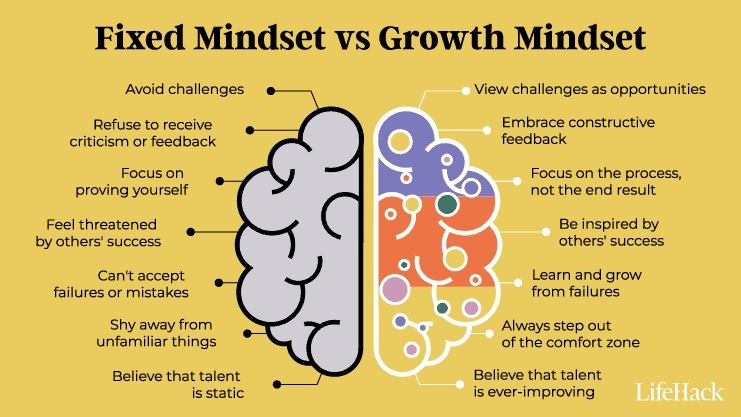
Mindset Theory distinguishes between two main types of mindset: a Fixed Mindset and a Growth Mindset. These mindsets are characterized by specific principles and beliefs.
Fixed Mindset
Belief: People with a Fixed Mindset believe that their abilities and intelligence are fixed traits and cannot change significantly.
Challenge Avoidance: People with a Fixed Mindset tend to avoid challenges because they fear that failure will expose their lack of ability.
Limited Effort: People with a Fixed Mindset may not put in much effort because they believe their abilities are innate and that extra effort won’t make a substantial difference.
Frustration over setbacks: When faced with setbacks, people with a Fixed Mindset often become discouraged and can give up easily.
View of effort as fruitless: People with a Fixed Mindset perceive effort as a sign of incompetence rather than a path to mastery.
Threatened by the success of others: People with a Fixed Mindset may feel threatened by the success of others and may react with envy or insecurity.
Growth Mindset
Belief: Those with a Growth Mindset believe that their abilities and intelligence can be developed through effort, learning, and perseverance.
Accept challenges: People with a Growth Mindset accept challenges as opportunities to learn and grow, and see them as a way to expand their abilities.
Emphasize effort: People with a Growth Mindset understand that effort is the path to mastery and are willing to work hard to achieve their goals.
Resilience in the face of setbacks: People with a Growth Mindset see setbacks as part of the learning process and are more resilient in the face of failure.
View of effort as a path to mastery: For people with a Growth Mindset, effort is seen as a positive and necessary part of the learning process.
Inspired by the success of others: Those with a Growth Mindset are inspired by the success of others and see it as a source of motivation and learning.
Development and Learning
Mindset Theory emphasizes the idea that people can develop and change their way of thinking. People can move from a Fixed to a Growth Mindset through self-awareness, deliberate effort, and practice. This developmental perspective is critical to understanding the potential for personal growth and achievement.
Our Mindset significantly influences our behavior, learning and achievement. A Growth Mindset is associated with the willingness to take on challenges, push yourself, learn from mistakes, and ultimately achieve greater levels of success and satisfaction.
Mindset Theory has practical applications in education and coaching. Teachers, parents, and coaches can use Mindset Theory principles to encourage a Growth Mindset in students and individuals, fostering a love of learning and resilience in the face of challenges.
Strategies for developing a Growth Mindset include self-reflection, reframing beliefs, accepting challenges, setting goals, seeking feedback, and learning from failures.
Types of Mindsets
While the Fixed Mindset and the Growth Mindset are the most well-known types of Mindsets, there are other Mindsets that people can have that can affect their attitudes, behaviors, and perceptions. Here are some other types of Mindsets with explanations and examples.
Open Mindset
Belief: An Open Mindset is characterized by the willingness to consider new ideas, accept change, and adapt to different perspectives.
Example: A person with an Open Mindset is willing to try new foods, learn new languages or explore different cultures. They readily accept feedback and seek diverse points of view.
Closed Mindset
Belief: A Closed Mindset involves resistance to change, being unwilling to consider new ideas, and being determined in your own ways.
Example: Someone with a Closed Mindset may refuse to try new technologies, stick to traditional methods, and dismiss any suggestions or comments that challenge their existing beliefs.
Optimistic Mindset
Belief: An Optimistic Mindset is characterized by a positive outlook on life, seeing challenges as opportunities and believing that, generally, things will turn out well.
Example: An optimistic person may view job loss as an opportunity to explore new career paths and believe that even in difficult times, there is something to learn and gain.
Pessimistic Mindset
Belief: A Pessimistic Mindset involves a tendency to focus on the negative aspects of situations, expect the worst, and often view challenges as insurmountable.
Example: A pessimistic individual may anticipate that a project will fail and that any effort will be futile, leading to reduced motivation and a self-fulfilling prophecy.
Abundance Mindset
Belief: An Abundance Mindset is characterized by the belief that there are many opportunities, resources, and successes for everyone, and that the success of one does not limit the success of others.
Example: Someone with an Abundance Mindset views business competition as healthy and believes that their success does not mean that others cannot also thrive in the same market.
Scarcity Mindset
Belief: A Scarcity Mindset is the opposite of an Abundance Mindset. It involves the belief that resources, opportunities, and successes are limited and that one’s benefit comes at the expense of others.
Example: A person with a Scarcity Mindset may feel threatened by the success of their colleagues, fearing that it will diminish their own chances of advancement.
Expert Mindset
Belief: An Expert Mindset is characterized by a high level of confidence and a belief in one’s extensive knowledge and competence in a particular area.
Example: An Expert Mindset can be seen in a seasoned professional who has accumulated years of experience and feels very competent in his or her field.
Beginner Mindset
Belief: The Beginner Mindset involves approaching life with curiosity and humility, as if you were a novice eager to learn and explore.
Example: Someone with a Beginner Mindset is open to acquiring new skills or knowledge in a field they are unfamiliar with and does not assume they know everything.
Proactive Mindset
Belief: A Proactive Mindset is characterized by taking initiative, assuming responsibility, and actively seeking solutions to challenges and opportunities.
Example: A proactive person does not wait for problems to arise; They anticipate problems and take steps to prevent or address them before they become major obstacles.
Conclusions
Carol Dweck’s Mindset Theory is a framework that distinguishes between Fixed and Growth Mindsets, based on people’s beliefs about their abilities and potential.
A Fixed Mindset believes that skills are static, while a Growth Mindset believes that skills can be developed through effort. A person with a Fixed Mindset may avoid challenges, believing that they do not have a natural talent in that area, while a person with a Growth Mindset accepts challenges, knowing that effort can lead to improvement.
Understanding and adopting a Growth Mindset can lead to greater motivation, resilience, and a greater capacity for personal development and achievement. The fundamental principles of Mindset Theory serve as a foundation for fostering positive changes in people’s lives, particularly in the areas of education, personal development and coaching.
There are also other different types of Mindsets such as Open and Closed or Optimistic and Pessimistic. These various Mindsets can shape the way people approach life, make decisions, and respond to challenges and opportunities.
While people may naturally lean toward certain Mindsets, it is possible to cultivate them and shift between them through self-awareness and deliberate efforts. The choice of Mindset can significantly influence personal and professional growth and overall quality of life.
During the last years I have been studying the fascinating discipline of Ontological Coaching. This is a learning modality aimed at transforming the type of observer we are. It has the goal of expanding our possibilities and capacity for action, managing to increase our effectiveness and well-being.
The concept of Observer Change is one of the most powerful Ontological Coaching tools. When we approach a new goal of change or growth, our positioning as an observer may involve resistance or new transformational learning, and this will determine the results we obtain.
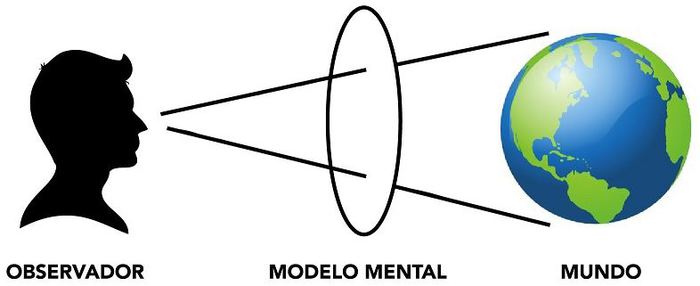
The Observer and the World
“We don’t see things as they are, we see things as we are.”
The observer appears when we consider the meaning we give to our actions. Every time we face a problem, the way we interpret it leads us to consider some actions and leave aside others. But if we change the way we view a problem, there will be a readjustment in our actions.
From the perspective of Ontological Coaching, there are no problems to solve externally, regardless of our thoughts and emotions. The way we see the problem is part of the problem. This is why the interpretation we have about a situation and the sensations it generates in us are central aspects that we must address to act effectively.
There are circumstances in which it is not about solving the problem, but about taking a new look at it. These are the cases in which, by transforming our observation perspective, modifying our interpretation of the facts, the situation no longer seems so problematic to us. Many times this change allows us to see possibilities or opportunities that until now seemed nonexistent to us.
“The world has problems that cannot be solved by thinking the same way we did when we created them.” – Albert Einstein
The Objective of the Observer Change
Coaching conversations aim to achieve a change in the observations and explanations we have about ourselves, about others, about the environment and circumstances, about what we judge possible or impossible, about what we value as a threat or opportunity.
The Ontological Coach approach helps the client separate the phenomenon from its interpretation. Our experiences are the things that happen to us in life and about them we develop interpretations and tell ourselves stories. These narratives give meaning to what happens and it is this meaning that opens or closes possibilities for us. In this way, our interpretation expands or restricts our actions.
The coaching process ensures that the coach can discriminate between verifiable facts and the opinion that has been formed about them. That he can review the foundations and validity of the judgments made and recognize his client’s beliefs.
Accessing a different observation or reframing one’s own interpretations allows one to observe events from another perspective. This opening of new horizons of meaning is what allows us to expand the capacity for action and achieve a significant change in results.
The OSAR Model
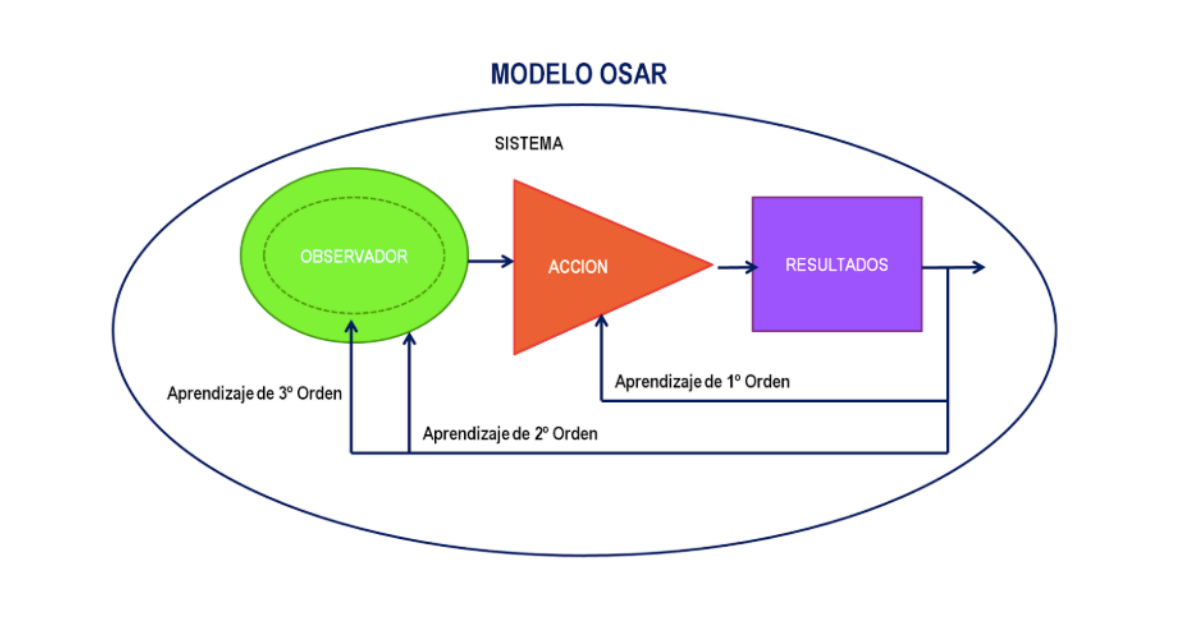
The OSAR model refers to the Ontological Coaching technique developed by Rafael Echeverría that explains the interactions between the Observer (O) the System (S), the Actions (A) and the Results (R).
The OSAR model in Ontological Coaching explores the interactions between the Observer (O), the System (S), the Actions (A) and the Results (R). This model is used to understand how individuals perceive, interpret and respond to situations. Here is an explanation of the OSAR model in Ontological Coaching:
Observer (O)
The Observer in the OSAR model represents an individual’s perspective, perception, and way of seeing the world. It encompasses your beliefs, values, emotions and cognitive processes. The Observer influences how individuals interpret and give meaning to their experiences. It’s about how they see themselves, others, and the world around them.
System (S)
The System refers to the context or environment in which the individual operates. It includes all external factors, people, relationships and circumstances that contribute to the situation. The System is the broader context in which an individual’s Actions and interactions take place. It can affect the way the individual perceives and responds to his or her environment.
Actions (A)
Actions in the OSAR model encompass the behaviors, decisions, choices and responses that an individual makes within a given System and based on their Observer perspective. Actions are a reflection of the individual’s beliefs, emotions and interpretations. They are influenced by both the Observer and the System.
Results (R)
Results represent the outcomes and consequences of actions taken by the individual within the System and influenced by their Observer perspective. Results can be both tangible and intangible and provide feedback that can inform the individual’s future actions and decisions.
The OSAR model suggests that there is a dynamic interaction between these four elements. The Observer’s perspective influences how they interpret the System, which, in turn, affects the Actions they take. These Actions lead to certain Results, which can further shape the Observer’s perspective and the cycle continues.
Learning Levels in the OSAR Model
Rafael Echeverría’s OSAR Model provides a framework for understanding learning and the Observer Change in the context of Ontological Coaching. Using the OSAR model, we can define three different types of learning that represent different levels of awareness and change:
First Order Learning
Second Order Learning
Transformational Learning
First Order Learning
Any Result has as its origin some Actions, which led to the fulfillment of said Result. Therefore, if we want to change something (Result), we will always have to see what Actions caused it.
That is why, first of all, the questions we must ask ourselves are “what should I do to obtain a different result” or “what should I not do, that I did do, to obtain a different result.”
Observer (O): In the context of First Order Learning, the Observer represents an individual’s existing perspective, beliefs, and interpretations. This perspective often reflects habitual or automatic ways of seeing the world.
System (S): The System encompasses the external environment and the context in which the individual operates. It includes the people, relationships, and circumstances that influence the individual’s experiences.
Actions (A): First Order Learning focuses on Actions that arise from the perspective of the existing Observer (O). These Actions are often habitual, based on pre-existing beliefs and assumptions, and may not lead to the desired Results.
Results (R): Results in First Order Learning are typically consistent with the existing Observer perspective. If an individual’s Observer has Limiting Beliefs, her Actions and Results will reflect those limitations.
In summary, First Order Learning consists of recognizing and improving the quality of Actions based on the perspective of the existing Observer. It involves making incremental changes to Actions within the framework of the existing belief system.
Second Order Learning
Here we go directly to the Observer of the Actions, we take a step back. If we are able to modify the Observer, or make him see another point of view that leads to another Result, then we will be performing Second Order Learning.
That Observer is influenced by your judgments, beliefs, positions and his ideas. Here the questions are more directed to “why” and “what are you basing it on”. For example: “You have always obtained the result with the same action plan. What would happen if you stopped doing it?”
“Insanity is always doing the same thing and expecting different results.” – Albert Einstein
Observer (O): In Second Order Learning, the Observer perspective is more conscious and open to change. The individual begins to question existing beliefs and interpretations of him.
System (S): The System remains the same, but the individual becomes more attuned to how his or her perspective influences his or her interactions within the System.
Actions (A): Second Order Learning involves Actions that are influenced by a changing perspective of the Observer. The individual is more open to trying different approaches and experimenting with new behaviors.
Results (R): Second Order Learning Results reflect the evolving perspective. The individual may experience some improvements and positive results as a consequence of the changing actions.
In summary, Second Order Learning involves exploring and adjusting Actions based on a changing Observer perspective. The individual becomes more open to new possibilities and begins to make behavioral changes based on this evolving awareness.
Transformational Learning
Here we are able to change the “Hard Core” of the Observer. We change our judgment, opinion or position, always immersed in the same System. They are the most profound changes, those that affect the Observer and the way he interacts with his System.
If we do not achieve the objectives of the original Observer that we are being, then we will have to change Observer to develop another Action plan that obtains different Results.
Observer (O): In Transformational Learning, the Observer’s perspective undergoes a profound change. The individual experiences a fundamental change in their beliefs, values and ways of seeing the world.
System (S): While the System remains the same, the individual’s transformed perspective allows him or her to interact with the System in entirely new ways.
Actions (A): Transformational Learning leads to Actions that are radically different from those of the individual’s previous self. The individual is willing to take risks and explore uncharted territories.
Results (R): Results in Transformational Learning reflect the profound and lasting changes in the individual’s life. They experience significant growth, both personally and professionally.
In short, Transformational Learning is the highest level of learning and change. It involves a profound change in the Observer’s perspective, which, in turn, leads to radically different Actions and Results. The individual is no longer bound by old patterns and limitations and adopts a new way of being.
Conclusions
The OSAR model suggests that there is a dynamic interaction between the Observer (O), the System (S), the Actions (A) and the Results (R). In Ontological Coaching, understanding this dynamic relationship is crucial to helping people make significant changes in their lives.
Coaches use the OSAR model to explore how the individual’s (Observer) perspective can be transformed to generate more effective Actions and achieve desired Results. By identifying and changing limiting beliefs and patterns in the Observer, Ontological Coaches help clients create more positive and constructive outcomes in their lives.
The OSAR Model in Ontological Coaching provides a structured framework to understand and facilitate different levels of learning and change. First Order Learning focuses on incremental improvements, Second Order Learning involves a changing perspective and evolving actions, while Transformational Learning represents a deep and lasting transformation in an individual’s beliefs, behaviors and outcomes. These concepts help coaches guide clients through various stages of personal and professional development.
Man using scissors to remove the word can’t to read I can do it concept for self belief, positive attitude and motivation
Beliefs are principles of behavior on which we act as if they were true. We build our beliefs based on our experience, and in turn, our beliefs influence our experiences. Our beliefs make some experiences possible and others not.
A belief is a public declaration of our way of seeing the world. To give an example, “money doesn’t buy happiness.” Each person has their own beliefs. There will be those who do not agree with the above and think that “having money is the only way to guarantee that our basic human needs are fully met.”
Some of our beliefs can limit our possibilities, and for this reason they are called Limiting Beliefs. In contrast, other beliefs may expand our possibilities and as such they are called Empowering Beliefs.
Limiting Beliefs
Limiting Beliefs are those things you believe about yourself that place limitations on your abilities. These Limiting Beliefs are a way of observing the world from perspectives that do not allow us to progress in many areas of our lives, depriving us of thriving as a person.
A Limiting Belief is something that manifests itself in your mood or something you believe about yourself that, in some way, conditions you. All of us have some beliefs that limit us, but if we learn to identify them we can avoid them proactively.
Limiting Beliefs are simply assumptions about reality that are not true. For our actions to have the greatest positive effect, we need to have beliefs that are as close to reality as possible; Deceiving ourselves will take us further from the goal.
These Limiting Beliefs tend to be based on certain experiences or on ideas and norms that we have acquired from our culture, education or peer group.
Examples of Limiting Beliefs
“I’m not able to do business, I’m too honest for this kind of negotiations.”
“It is impossible for me to be a public speaker, I’m too afraid to face an audience.”
“I can’t have serious relationships, probably I will never get married.”
“I’m incapable of learning a foreign language, it is too difficult for me.”
“I do not deserve to lead this project, I do not have the right skills.”
Empowering Beliefs
Empowering Beliefs, on the other hand, are responsible for improving our mood and self-esteem. Empowering Beliefs are those that help us move towards the goal that each of us sets for ourselves. They are beliefs that drive you to grow, to enhance the best in yourself and to meet your proposed goals.
These Empowering Beliefs come from the information and experiences that a person stores in the subconscious at different times in their life. When we have encouraging experiences, we have the strength, energy and inspiration to develop a positive and enthusiastic personality towards the world.
These are some of the characteristics of Empowering Beliefs:
They do not limit. They motivate us to achieve something specific.
They encourage the person to bring out the best version of themselves.
They help us to develop our full potential, focusing on achieving our goal.
They generate action, they do not paralyze, but rather they invite us to carry out actions.
They provide security and positive motivation.
Examples of Empowering Beliefs
“With great dedication, I will be able to learn French in a short period of time.”
“I already have many achievements and I will continue to be successful.”
“The selection process is tough, but I am prepared for the exams and interviews.”
“There are many candidates, but I am more qualified than most of them.”
“Although I have not found the perfect partner yet, it is just a question of time.”
Conclusions
A Limiting Belief can block you and not allow you to carry out actions that are totally logical. In contrast, an Empowering Belief can lead you to achieve the most impossible challenges. Therefore, changing your beliefs can change your life experience, and improve your life in a very decisive way.
It is important to recognize which are our Empowering Beliefs to find a way to continue enhancing them, and identify which are our Limiting Beliefs to find a way to change them.
We live in a time of constant change and extremely rapid technological progress. Some professions are disappearing and new professions are being created.
You will probably be forced to change professions during your lifetime. Most people will not retire in the same profession in which they started their career.
The big challenge for professionals in the modern world is that they never run out of options if they are forced to change careers. In other words, our goal is to always have good alternatives if we need to look for a new job or a new source of income.
The risk of the modern world is not just being unemployed. The risk is becoming obsolete. Being obsolete means having no options.
Optionality
What is Optionality? Optionality is a strategy to always increase our number of options.
In the context of our careers, the objective of the Optionality strategy is to guarantee that as a professional you will never be considered obsolete. We want to ensure that you will always have job offers and will always be able to find alternative sources of income.
In general, it is considered natural that a person’s options are reduced as they get older. We consider it normal for a professional over a certain age to become outdated and have much more difficulty getting a new job.
Thanks to the strategy of Optionality, we can achieve exactly the opposite: the older we get, the more alternatives we will have. We will never become obsolete, we will always be in-demand professionals.
Developing New Skills
To increase our number of options, it is necessary to constantly develop new skills. The secret is that while knowledge may become obsolete or a specific profession may disappear, our abilities never lose their value.
Skills serve as multipliers of our potential. Nowadays a large number of people have access to university studies that give access to good jobs. But if you want to really stand out in your profession, you need to develop a series of other skills that differentiate you from other professionals in your field.
This is the meaning of your Unique Value Proposition = How do you stand out from other professionals? Why are you different?
For example, most people are afraid of public speaking. If you can develop the ability to give talks, you will have an advantage over other professionals.
Another example, many competent professionals miss opportunities to be promoted because they never developed their team leadership attributes. Thus you can increase your chances of being promoted by investing in acquiring leadership skills.
Skills are Transferable
As we discussed earlier, most people will be forced to change careers during their lives. This means that part of their knowledge and experience may become useless in their new jobs.
Depending on your current occupation, some knowledge or experience may become irrelevant when you are forced to look for a new job. But skills that have been useful in the past generally continue to be valuable when a person makes a career change.
For example, if you have developed the ability to negotiate, this will be beneficial in a wide variety of situations. A person who knows how to defend their interests will always have an advantage over other people who are less assertive.
An aptitude, once conquered, will never become obsolete. Throughout history we have seen the disappearance of many professions and the emergence of others. But human abilities such as soft skills have been basically the same since time immemorial.
In recent years, generative models have transformed the landscape of Artificial Intelligence (AI) and Natural Language Processing (NLP). One remarkable example is the GPT (Generative Pre-trained Transformer) series of models developed by OpenAI. These models have demonstrated the ability to generate coherent and contextually relevant text, enabling applications like ChatGPT, which engages in human-like conversations.
Building upon this technology, companies can harness the potential of an Internal GPT: a generative model trained on their own proprietary data and internal documents. This article delves into the concept of the Internal GPT and outlines the numerous benefits it can offer to organizations across various domains.
The Concept of Internal GPT
The concept of the Internal GPT is similar to the concept of the Intranet. In the same way that the Intranet was used to give access to information that is private (proprietary) to some company or organization, the Internal GPT can be used to ask questions about topics that are specific to some company or organization, and get answers that are based on existing internal documents, wikis and emails.
The Internal GPT concept revolves around training a generative model using an organization’s internal data. This data may include company reports, emails, internal wikis, presentations, customer support interactions, and any other proprietary textual content. The model learns from this data and becomes proficient in understanding the company’s language, context, and domain-specific knowledge.
Approach: How to build an Internal GPT
Large Language Models (LLMs) such as the famous ChatGPT were built using public information available on the Internet (including articles, blogs and books). The Internal GPT models can be built by extending existing LLMs with additional texts. These texts can be extracted from wikis or from platforms such as Confluence. A professional Data Scientist knows how to create a new model combining the previous (public) model with the new (private) texts.
Benefits of the Internal GPT
When an employee asks a question using the Internal GPT, the answer he/she will get will be based on both the public and the private information. In other words, the answers will be based on a combination of public knowledge and proprietary documentation.
Therefore these answers will be unique:
The Internal GPT will generate answers that cannot be generated using ChatGPT.
The Internal GPT will provide answers that cannot be found in internal documents only.
In other words, this Internal GPT, combining public and private information, will be smarter than ChatGPT and also smarter than any existing platform inside the corporation.
Potential Applications of the Internal GPT
1. Enhanced Document Generation: An Internal GPT can generate coherent and relevant text, which can be incredibly useful for creating internal reports, presentations, and other documents. It can summarize complex data and offer insights in a language consistent with the company’s style.
2. Efficient Customer Support: By training the model on historical customer support interactions, an organization can develop an AI-powered assistant that understands common queries and provides accurate responses, relieving the burden on human support agents.
3. Knowledge Management: Internal GPT can serve as a smart search tool, making it easier for employees to find information within the organization’s vast knowledge repositories. This can expedite decision-making and enhance collaboration.
4. Automated Content Creation: From blog posts to marketing materials, an Internal GPT can aid in generating content, saving time and effort for content creators while maintaining brand voice and consistency.
5. Strategic Planning: By analyzing large volumes of internal data, an organization can leverage its Internal GPT to identify patterns, trends, and insights, thus supporting strategic decision-making.
6. Training and Onboarding: The model can assist in creating training materials and onboarding guides for new employees, ensuring a smooth transition into the company’s processes and culture.
7. Risk Assessment and Compliance: Internal GPT can assist legal and compliance teams by analyzing contracts, regulations, and internal policies, thus mitigating risks and ensuring adherence to guidelines.
8. Innovation and Idea Generation: When employees need inspiration or brainstorming assistance, the model can provide novel ideas based on its analysis of the organization’s historical data.
9. Personalized Communications: Marketing and sales teams can use the Internal GPT to craft personalized messages for customers, tailored to individual preferences and behaviors.
Conclusion
The Internal GPT represents a transformative leap in harnessing proprietary data for enhanced productivity, innovation, and decision-making. By training a generative model on internal documents, companies can create a customized AI assistant that understands their unique language and context. From generating documents to optimizing operations, the applications are diverse and impactful across industries. As the technology advances, organizations that embrace the power of Internal GPT stand to gain a competitive edge by unlocking the hidden potential within their data.
Please contact me if you would like to learn more about how to build an Internal GPT.






 Effective Software Design