I was recently invited by the Câmara Brasil-Israel de Comércio e Indústria (Cambici) in Rio de Janeiro to share my experience as an entrepreneur in Israel. Below is the video of the interview (in Portuguese) with some interesting insights. I think you will enjoy it if you are interested in learning more about the Israeli Startups Ecosystem. In the first 20 minutes of the video I explain about our startup Dooiu, in which I’m currently the CTO. In the last 20 minutes I discuss some of the unique characteristics of the Israeli culture that make it so suitable to entrepreneurship.
Special thanks to Henriette Krutman and Mauro Wainstock who invited me to share my experience.
Most people today are seriously involved in some effort to develop new skills or some other initiative for personal improvement, like acquiring better habits. However, when we invest our time and energy in such goals, it may be difficult to measure our progress. This difficulty to assess our results may be very frustrating.
In my opinion, the best way to measure our progress when learning new skills or developing better habits is to implement feedback mechanisms. These feedback mechanisms are the tools we can employ to actually guarantee that we are moving in the right direction, and have concrete metrics about how fast we are moving in this direction.
How to receive feedback?
Feedback mechanisms are very important in any activity you undertake to gain experience. For each type of activity you should plan the most efficient type of feedback. Planning the feedback mechanisms is an integral part of the plan for each personal or professional development initiative. Without this kind of feedback, your plan won’t be complete and you won’t be able to learn what you need to learn.
A basic feedback tool is questionnaires. At the end of each activity, both face-to-face and online, you can send a questionnaire to the participants. The answers will be very useful for you to identify your strengths as well as your weaknesses.
Furthermore, if you repeat a type of activity frequently, the feedback will allow you to identify trends: Do you have clear indications that you are improving? Are you becoming more experienced? Are you receiving less criticism? Are the people who are participating in these activities becoming more satisfied than before?
For example, if you’re leading a team, you might want to ask the people you’re leading to provide you with some form of feedback on your performance. In general, in any professional environment you should ask for the feedback of all your co-workers, and not only the opinion of your superiors or people who are managing you.
Outside the professional context, it is also possible to do a general feedback exercise, in which you can ask your friends to describe your main qualities. The responses you’ll receive can be quite surprising.
For example, I recently asked 20 friends to describe 3 of my qualities. Several people wrote that I am honest, trustworthy, with integrity. This surprised me. Obviously I believe that I really have these qualities, and they are very important to me, but that’s not what surprised me.
What surprised me was to see that for my friends my honesty was a quality that stood out and deserved to be mentioned as one of my main qualities. Then I understood that these friends of mine probably considered me much more honest than the average person, and that’s why they trusted me a lot. Of course it was important for me to be an honest person, but I discovered that for my friends my honesty was even more important.
Now think about your case. What are your main qualities? Perhaps you also have some attributes that are considered outstanding and much above average? I recommend that you also do this exercise with your friends.
Immediate feedback from Social Networks
Social networks certainly have many flaws, and they are heavily criticized for that. But one of my favorite aspects of social media is the ability to get immediate feedback from a wide range of people.
When you make a post on a social network like Facebook, that post will be immediately judged by your audience, who will react with likes and comments. So we can say that a post was successful if it generated a lot of likes and got a lot of positive comments.
Obviously, these likes and comments are very good for our ego, and can even create a certain dependence. There are people who are addicted to likes, and even get depressed if they make a post that receives few likes.
But if you’re really committed to developing your content generation skills, this feedback is essential. The likes indicate that your post is well written, that it is relevant, and that people agree with your way of thinking.
Thus, these skills that you develop on social media can become useful in a completely different context, like for example at work, when you need to send an email or write a comment or a post in a Slack channel.
In the case of LinkedIn, when you generate content you are exposing yourself to other professionals like you. This can have a direct impact on your reputation. If people like your content they will remember you, and this can generate opportunities for new projects and partnerships.
Please notice that it’s not about you aiming to become a digital influencer, or a “top voice”. You don’t have to strive to create content on a daily basis to impress others with your wisdom. Personally, I only write when I feel inspired and when I think I have something really interesting to contribute to my contacts.
The goal here should really be to create value for your network. So when you write a post, you must think that you are using a part of your time creating content that can be useful for other people. When you get likes and positive comments, it means these people recognize that the content you’ve created really has value to them.
In Summary
Whenever you plan some personal or professional development activity, such as learning new skills or acquiring better habits, make sure also to integrate the appropriate feedback mechanisms that will enable you to measure your progress. For example, you can send questionnaires to your friends and co-workers, and you should also use the immediate feedback you can get from social networks.
Prompt Engineering is not a profession. Prompt Engineering is a skill. It is the ability to write effective prompts for Generative Models like ChatGPT, and it can be potentially useful in many professions.
In the same way that millions of professionals use Word and Excel in their daily jobs, people will need to write prompts for Generative Models to accomplish their tasks. But this does not mean that there will be a category of specialists that will be paid to spend most of their time writing good prompts. If you don’t like the example of Microsoft Office, we could also say that ChatGPT is only a tool, in the same way that Figma, Jira and Git are tools.
But in my opinion it is even more important to understand that the effective usage of Large Language Models (LLMs) such as ChatGPT requires Domain Knowledge. A professional must have previous experience with the domain in order to write good questions, and also to be able to validate that the responses produced by the model really make sense.
A person must have previous Domain Knowledge to be able to write a really effective prompt in this domain. So, for example, if you would like to ask ChatGPT to produce an amazing travel itinerary to some touristic destination, you must include in your prompt the important aspects you are looking for. If you are not able to determine the building blocks that compose a great travel itinerary, you will not be able to optimize your prompt.
Besides that, Domain Knowledge is required to understand if the response produced by the model is correct and complete. It is a well-known fact that LLMs can hallucinate, generating answers that sound plausible but actually are plain wrong. Very often also the results produced by these models are incomplete, missing important information. Only a person that has experience with the domain will be able to identify if the text that was generated by the model is wrong or incomplete.
Therefore, the conclusion is that there will not be such a thing as a generalist Prompt Engineer. In many professions, people will be required to learn how to write good prompts. The professionals who will become the best prompt writers will combine their ability to use Generative Models with their previous Domain Knowledge.
Do you work with interns in your company? As a leader, are you able to motivate people to contribute to your company even if they are not being paid?
In the picture below I’m with my nice team of interns: Boris Vasilev (a Software Developer), Denis Laevskiy (a Data Scientist), Peter Lunev (a Software Developer) and Roman Fomintsov (a QA Engineer). They don’t get a salary, but even so they are giving us a big contribution. What is the secret?
Without a concrete payment, the main extrinsic motivation they can get from their internship are the relevant experience and the possibility to mention our company in their CVs. But this is not sufficient.
As any other collaborator, interns also need intrinsic motivation, in the form of Autonomy, Mastery and Purpose:
Autonomy means that people should have some level of control about how they perform their jobs. In other words, workplaces should avoid having strict rules and allow employees to have some freedom. This is reflected very well in a quote by Steve Jobs: “It doesn’t make sense to hire smart people and tell them what to do. We hire smart people so they can tell us what to do.”
Mastery is the feeling that we are acquiring new skills, learning new subjects and developing our potential. In other words, employees should be able to grow while performing their jobs. At the same time that they are executing work-related tasks, they should feel that they are improving their capacity to perform these tasks.
Purpose is achieved when employees understand the importance of their work, and believe that they are contributing significantly to reach their project’s goals. In general a true feeling of purpose requires the employees to identify with the company’s vision and mission statements. They can only be really engaged and motivated when they feel part of something bigger.
Thus, as a leader, first of all I need to make sure that our interns do not feel different from the other employees in the company. I must guarantee that our interns will also have a sense of Autonomy, Mastery and Purpose.
But interns are special because they deserve more Attention and more Contact with the other employees. This attention and contact enable them to have a very rich and valuable experience, according to their expectations.
Regarding Attention, we must make sure that the interns are always able to make progress in their tasks and that there are no obstacles. Interns require more attention than more experienced employees because they may be ashamed to ask for help. But we must be very careful to avoid micromanagement.
It is also very important for interns to have Contact with other members of the team, including people that are not directly related to the tasks they are performing. These interactions among the interns and other collaborators in the company is a very relevant experience for them, and in general the interns really enjoy talking to co-workers who can provide them valuable insights.
I would like to thank my partners Eli Berger and Jake Gillis from Israel Experience, Maaian Plescov from Israel Tech Challenge (ITC), Tal Yaron from iNT College – Institute of Innovation and Technology and Or Adi from TAMID Group. We really appreciate that over the years you have sent us such nice interns.
I must say that my experience working with the interns is very pleasurable. I don’t really understand all these managers that complain about working with Millennials. If I can motivate a young person working for free, I guess any competent manager should be able to obtain good results from young people that also have a nice salary.
The title of this article is the combination of two very famous quotes:
“We are what we repeatedly do. Excellence, then, is not an act, but a habit.”
“Happiness is a journey, not a destination.”
The first quote is commonly attributed to Aristotle but it seems it was actually written by Will Durant. The second quote is by Alfred D. Souza, but I also saw it being attributed to Buddha.
In any case the combination of these two quotes occurred to me when I watched a lesson (in Hebrew) by my friend Ran Weber. He said (in my own free translation):
“Instead of constantly trying to search for the best thing we could possibly be doing, we should focus on doing as well as possible what we are already doing.”
The second part of Ran’s phrase, to “focus on doing as well as possible what we are already doing” is exactly the aspect of excellence. I believe that most people would agree that in order to achieve excellence we must be focused on what we are doing now.
But in my opinion the first part of Ran’s phrase is the secret to understanding why so many people are unhappy. These people can’t be happy, because they are “constantly trying to search for the best thing [they] could possibly be doing”. So they are focusing on some destination, and not on the journey. And thus their happiness actually becomes a “moving target”.
Example: What happens in our jobs
It seems that nowadays it is extremely difficult for someone to really feel happy about his or her job. People in general have this tendency to dream about a different job, in which they would have a higher salary, more interesting tasks, a better relationship with their managers and colleagues, more opportunities to grow and be promoted, and a company culture more suited to their own personality.
As a natural consequence, people in this situation don’t have the motivation to do their best. Because they feel unhappy, they also do not achieve excellence in their work. And this creates a downward spiral that is very difficult to escape from.
The downward spiral: If someone is not doing a good job, this person will not be assigned more interesting tasks. Neither will this person be able to improve his or her relationships with managers and colleagues. Finally, this person will have no opportunity to grow nor to be promoted.
So, the secret to achieve happiness, as Ran explained, is: “focus on doing as well as possible what we are already doing”. This is your job now, so simply try to do the best you can.
I believe that as a result of this approach of “always doing the best you can”, a person will eventually derive more satisfaction from his or her job: by having access to more interesting tasks, by gradually being recognized by managers and colleagues and eventually being promoted.
In other words, this person that is able to focus on excellence will also be able to enjoy the journey. At any point in time, this person will feel proud.
I think that this principle applies to employees in a company, but also to consultants, businessmen and entrepreneurs. Any professional can benefit from focusing on excellence and enjoying the journey instead of constantly looking for happiness somewhere else.
What do you think? Do you agree? Please feel free to share your opinion in the comments below.
In this post, I would like to add one observation about Google vs ChatGPT. We need to understand that ChatGPT is just a language model and not a knowledge model or a conceptual model. Thus, it only captures relationships between words and not relationships between entities or between concepts.
ChatGPT is a generative model that incrementally outputs the most likely word from a sequence of words, starting with the prompt (the question) offered by the user. Therefore, ChatGPT answers are always very clear texts, very well written and well structured, but there is no guarantee that they are conceptually correct.
To immediately find the shortcomings of this model, it is enough to focus on the Long Tail. Any question you ask about unfamiliar subjects is likely to get an incorrect answer. In some cases the model assumes its ignorance and does not respond, but in many other cases it produces an entirely wrong answer. You can make your own experiments by asking about subjects for which there are not many materials available.
In this Long Tail case, Google Search is still far superior to ChatGPT for good answers, because the search engine always finds the most relevant pages, and never “invents answers” based on probabilistic language models.
Most people today understand the importance of networking to advance their personal and professional goals. And one of the most practical and effective ways to expand our network is to participate in Meetups. In general, people who go to Meetups have the explicit goal to make new contacts, with the intention that these new connections may generate them interesting opportunities in the future.
Even better than participating in a Meetup is to be a speaker. Of course, the person who is the speaker in a Meetup is the focus of attention, and will have the possibility of making many new connections. For this reason, it is not difficult for Meetup organizers to find qualified professionals who are willing to speak for free. A great way to establish our personal brand and improve our reputation is to be invited to speak at such events.
But of course there is only a limited number of Meetups, and it may be difficult to be frequently invited to speak. Naturally, the Meetup organizers want to diversify their speakers, and will avoid inviting the same person more than once. For this reason, it is common for professional speakers to travel to other cities in order to have more opportunities to join such events.
Now the question: How can you speak in any Meetup?
I will share with you an approach I have been using for many years, and which is very effective: When I want to speak in a Meetup, I simply listen to the presentation and ask interesting questions. It may be surprising, but a person in the audience asking a good question may drive as much attention as the speaker. As a result, many of the other people in the audience will remember the ones who asked the questions, and will be interested in talking to them.
Thus, as a consequence of my questions, it always happens that some people will approach me after the talk. These people have a very clear way to start a conversation with me, because they can refer to the question I asked during the talk. They also may have an initial understanding about who I am and what are my topics of interest, based on the questions I asked.
For example, it is very common that people approach me and say: “I really liked your question!” Others may say: “You asked an interesting question, and this is my opinion about it…” And sometimes people will say: “I did not completely understand your question nor the speaker’s answer, can you please explain it to me?”
Very often, when I ask a question, I start by introducing myself and explaining what I do. For example I could say: “I’m the CTO at a startup company and we are also using Machine Learning to solve a similar problem. Can you please explain…” Thus, I use my question as an opportunity to make a personal introduction and present myself to the other Meetup’s participants. It is very effective, and in my opinion also very polite.
But if you would like to adopt this approach, it is important to make sure that your questions are authentic. I only ask a question if there is something that I really want to understand, and only if I believe that most people in the audience would be interested in knowing the answer to this specific question. In other words, the answer to your questions should be a natural extension to the material being presented by the speaker.
Thus, in general I avoid making provocative questions, or questions that may sound as a kind of criticism to the material being presented by the speaker. I also avoid making questions that are not directly related to the main topic being discussed, or questions that would require an answer that is at a much deeper level and take a long time to explain. Finally, the questions should never be an interruption, so I wait for the appropriate moments to ask them.
I hope you can benefit from this approach in the next Meetups you participate in the future, and that it will help you to grow your network with interesting new connections. Please feel free to use the comments below if you have other ideas about how to enjoy your Meetups.
What do you feel like doing? What are you afraid to do?
These seem like two very different questions: what we want to do and what we are afraid to do.
No one needs to push you too hard to do what you want. If you’re a normal person, you probably have a strong drive to fulfill your desires. If you feel like doing something, it’s probably also important for you to do it.
But it’s interesting that it might be just as important for us to do those things that we’re afraid to do. In fact, for many people, being able to do something they were afraid of can be a much greater accomplishment than doing something they’ve always wanted to do.
In other words, overcoming our fears can be far more satisfying than fulfilling our desires.
Very often, too, a fear is just a wish in disguise. Like when you say: “I’m afraid of leaving my job and setting up my own business” or “I’m afraid of investing in the Stock Market” or “I’m afraid of trying to immigrate to another country”.
I wish that in the year 2023 we all have the courage to face our fears and the willingness to fulfill our desires.
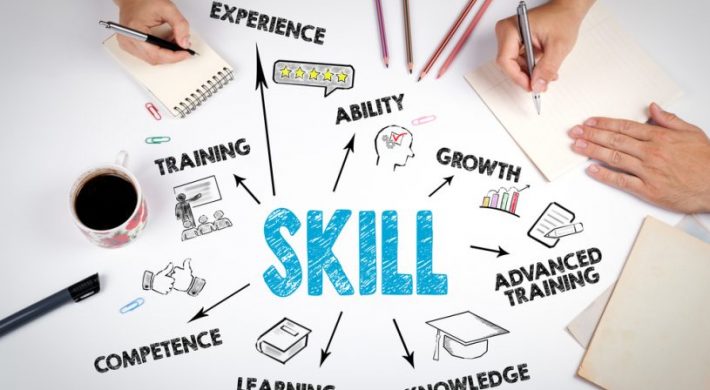
My personal definition: A transferable skill is one that suits to a wide range of professions, occupations or activities.
Thus, transferable skills remain useful and valuable even if you decide to change professions or if you are forced to modify your career path. It’s not always possible to predict what work you’ll be doing 10 years from now, but it’s safe to say that these transferable skills will continue to be useful.
In this article I will present one example of transferable skills (public speaking), illustrating how these skills can be acquired and developed.
Acquiring a new skill
Generally speaking, if we want to acquire a new skill, we need to follow a plan:
Define what skill we want to acquire.
Find the sources of information that will allow us to acquire knowledge about this skill.
Find ways to put this skill into practice to acquire experience in addition to knowledge.
Start simultaneously studying (gaining knowledge) and practicing (gaining experience).
After acquiring enough knowledge and experience, ensure that this skill can be monetized, which proves its value.
For example, let’s say you want to develop public speaking skills:
Define that you want to speak in public and choose the topic on which you would like to speak.
Find videos and articles of people giving tips on effective public speaking.
Find opportunities to speak in public, for example at meetups or conferences.
Start studying and practicing simultaneously.
When you feel prepared, you can start charging for public speaking.
In practice, several years can pass from the moment you start giving your first talks until someone is willing to pay you. But even if you’re not yet getting paid to speak in public, surely developing this skill will lead to other indirect revenue opportunities.
For example, someone who attended your lecture is very impressed and offers you a project.
Or maybe someone who liked your talk is willing to pay you to mentor them.
Or maybe someone makes you a job offer after watching your lecture.
On the importance of feedback
It is very important in the process of developing new competencies to ensure that you have appropriate mechanisms for receiving feedback.
Thus, in the previous example, at the end of the lecture you should pass a questionnaire to your audience so that they can say if they are satisfied and if they have any comments.
Likewise, in this example it is important that you record all your lectures so that you can review and analyze them.
As you review the videos, you can answer questions like:
How’s my intonation? Do I speak in a monotonous way or can I be more dynamic?
Do I speak with enthusiasm? Can I convey my enthusiasm to the audience?
What questions were asked during the lecture? Are these questions a result of audience interest or a lack of clarity in my message?
How is my body language? Do I look at the audience or avoid looking at them? Do I use my hands well or do I talk with my hands in my pockets?
My personal experience as a public speaker
It has always been important for me to have the ability to speak in public. But of course, as any normal person, I was afraid. So for me the first goal was to be able to face a group of people and speak in public without feeling afraid.
After several tries, I understood that in order not to be afraid of public speaking, I needed a few things:
Have total mastery of the subject. This means knowing exactly what I’m going to say, but also being prepared to answer every question.
Think about my audience in a positive way. Knowing that if they came to watch my lecture, it means they are interested in the subject. So I simply think that they’re all my friends and they like me.
Be well rested before the lecture and avoid thinking about other matters. Be focused on the topic of the lecture for several hours before the lecture.
Get out of your Comfort Zone
I once gave a talk in French. I speak French quite well, but not as well as Hebrew, Portuguese or English. So, at the beginning of the talk, I said:
“This is the first time I’m going to speak in public in French. For me, this is a big challenge. I’m sure I’ll make a lot of mistakes, there will be words that I’ll pronounce wrong, and other words that I’ll have to ask you how to say. But even so, it’s important for me to give this talk in French. I’m sure you’ll understand me and that I’ll be able to convey my message.”
The audience loved this intro. Not only were they even more willing to pay attention to the lecture, but they were also ready to help me, admiring my courage in trying to give a lecture in a language that I didn’t completely master.
Experience avoids anxiety
A person who has experience does not get nervous when he/she has to speak in public. This applies not only to lectures, but also to a wide range of other situations, such as meetings in a company.
If you’re not afraid to give a talk to a group of a hundred people gathered in an auditorium, you won’t have any difficulty participating in a meeting either. You will know how to coordinate your thoughts and speak in a clear and understandable way. You will be able to think quickly when answering questions.
Public speaking is a transferable skill because it also applies to a wide variety of other situations in which you need to get your ideas across to a group of people.
Best of all, when people recognize your public speaking skills, they’ll ask you to represent them in all the appropriate situations. So, if you are participating in a team project, and that moment comes when someone needs to present the results of the project, you will be the chosen one. In this way, your public speaking ability turns into a leadership quality that will set you apart from other professionals on your team, opening the door to new opportunities.
What should you do if you don’t like public speaking?
It may happen that you’ve chosen to develop this skill, and that after a few tries you’ve come to the conclusion that you really don’t like public speaking.
No problem. I’m not saying that all professionals necessarily need to have this skill. But I do believe that they should at least do an experiment and try to develop it.
In general, the main idea is for you to experiment with different skills and gradually discover your talents, what suits you best, what you like best.
The important thing is to know that all people have ignored talents, because they never had the chance to try. We must not imagine that our talents are just those things that we are naturally drawn to do. We may certainly discover that we have abilities we never imagined. What’s more, we may find that we enjoy doing things we’ve never tried to do before.
The secret is in exposing yourself to new experiences. But this must be structured so that you can come to valid conclusions. For example, if you want to learn how to cook, first understand the real complexity of cooking, and then invest in having good equipment and good ingredients.
There is no point in making an attempt with little investment and then abandoning it when the results are not as good as we would like.
In summary
I hope this article has presented you with a concrete approach to develop your own transferable skills. Plan to acquire both knowledge and experience, make sure you have the right feedback mechanisms, and don’t be afraid to get out of your Comfort Zone.
Please feel free to share in the comments below your own personal experience developing transferable skills.
I was recently invited by the Coaching Kosher platform to share my insights about the importance of Networking versus Reputation for professional development. Below is the video of my presentation (in Spanish) with some interesting insights. I think you will enjoy my presentation if you are interested in learning more about the importance of building your own Reputation in order to have more personal, professional and business opportunities.
Special thanks to Federico Pipman who invited me to share my experience.







 Effective Software Design