
 Today is the last day of the year 2019. At this very moment, most people are thinking about how they are going to change next year. They are making plans for 2020. But I’m making a retrospective: I’m thinking about how did I change in 2019.
I believe that the most important change in my attitude has been to focus on learning from others’ mistakes. Previously, I was very excited about reading success stories. I discuss this change in my approach in my previous post: “Should we Learn from Success Stories?”
I also understood that avoiding mistakes is what really increases our probability of success. I stopped trying to follow rules or to adopt a formula to be successful. I discuss this idea in my previous post: “On Rules and Probabilities”
Following this change in my attitude, I started asking the question: What is the science behind bad decisions? How can we really avoid making mistakes?
Learning from Chess Games
One of the most interesting articles I read on this topic was “Data Mining Reveals the Crucial Factors That Determine When People Make Blunders“, from MIT Technology Review.
This article is based on a scientific investigation using a database of 200 million chess games. The researchers have analyzed the games to detect whether a player has made a mistake, and what were the factors that have caused this mistake.
These are some of the main insights from this article:
“Decision making is influenced by the complexity of the situation, the skill of the decision maker, and the time pressure.”
“The amount of time spent on a decision is a factor in blundering, but only up to a point. Quick decisions are more likely to lead to a blunder, but after about 10 seconds or so the likelihood of a blunder flattens out. So when players spend more time than this on a move, it is probably because they don’t know what to do.”
“The difficulty of the decision is an important factor, too. More difficult positions are more likely to lead to a blunder.”
“Skill levels have a big impact in reducing the likelihood of a blunder. In general, better players make better decisions.”
And the most surprising: The researchers “have found evidence of an entirely counter-intuitive phenomenon in which skill levels play the opposite role, so that skillful players are more likely to make an error than their lower-ranked counterparts. The team call these ‘skill anomalous positions.'”
In summary
While at this moment most people are planning to adopt formulas to increase their success rate in 2020, I’m mostly focused on avoiding mistakes to reduce my failure rate. Happy New Year!
 Eventually we understand that there are no rules. There are only probabilities. There is a probability to succeed and there is a probability to fail.
 This is an uncut key. That’s how it comes from the factory.
 We are approaching the Jewish New Year. In general, in our New Year’s Resolutions, we always think about what we need to change: for example, we may decide to take an interesting course or start a revolutionary diet.
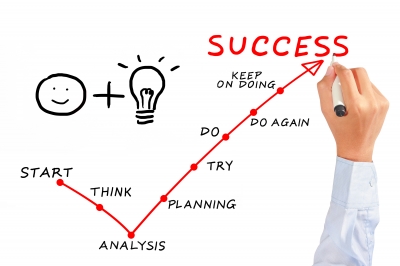 Most people are always looking for the “success formula”. They enjoy being inspired by huge success stories, and then try to emulate them. However, in general these success stories are often non-reproducible. They are the result of a combination of very unique factors.
 Are you afraid to speak in public? You are not alone…
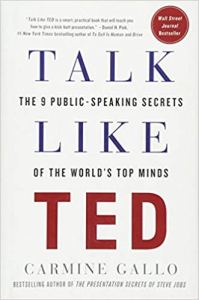 If people in general are so afraid of public speaking, it is a paradox that so many people would like to be public speakers. Many books try to help people to become better speakers, and some of them are real best-sellers, such as “


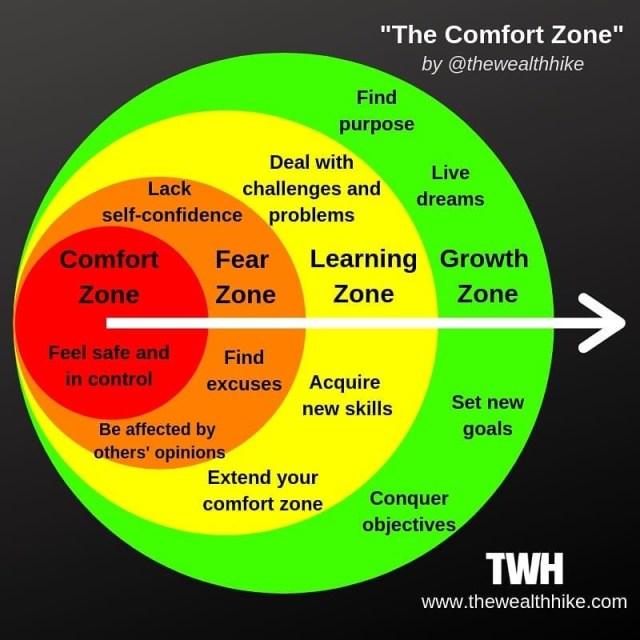
 People like to list “success factors” and even “habits of successful people”. My personal observation is that it is essential to have realistic expectations. When a person understands the real challenges he is facing, he is able to prepare accordingly. But if someone expects that things will be easier than they really are, he does not prepare well enough.
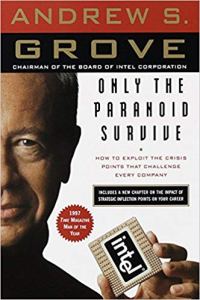 Andy Grove, founder and former CEO of Intel, wrote the book “
 Effective Software Design